Caitlin introduced our speaker Carol Markham from Everwild Land Trust (formerly known as Chautauqua Watershed Conservancy). Her topic is Yard Smarts: From Lawn to Living Landscape. Carol Markham is the Conservationist at Everwild Land Trust. She holds a B.S. in Marine Biology from Roger Williams University and an M.S. in Fisheries Management from Ohio State University. She spent nine years as a Natural Resources Biologist for the State of Maryland, specializing in fish stock assessment in Chesapeake Bay, where she also developed a strong interest in botany.
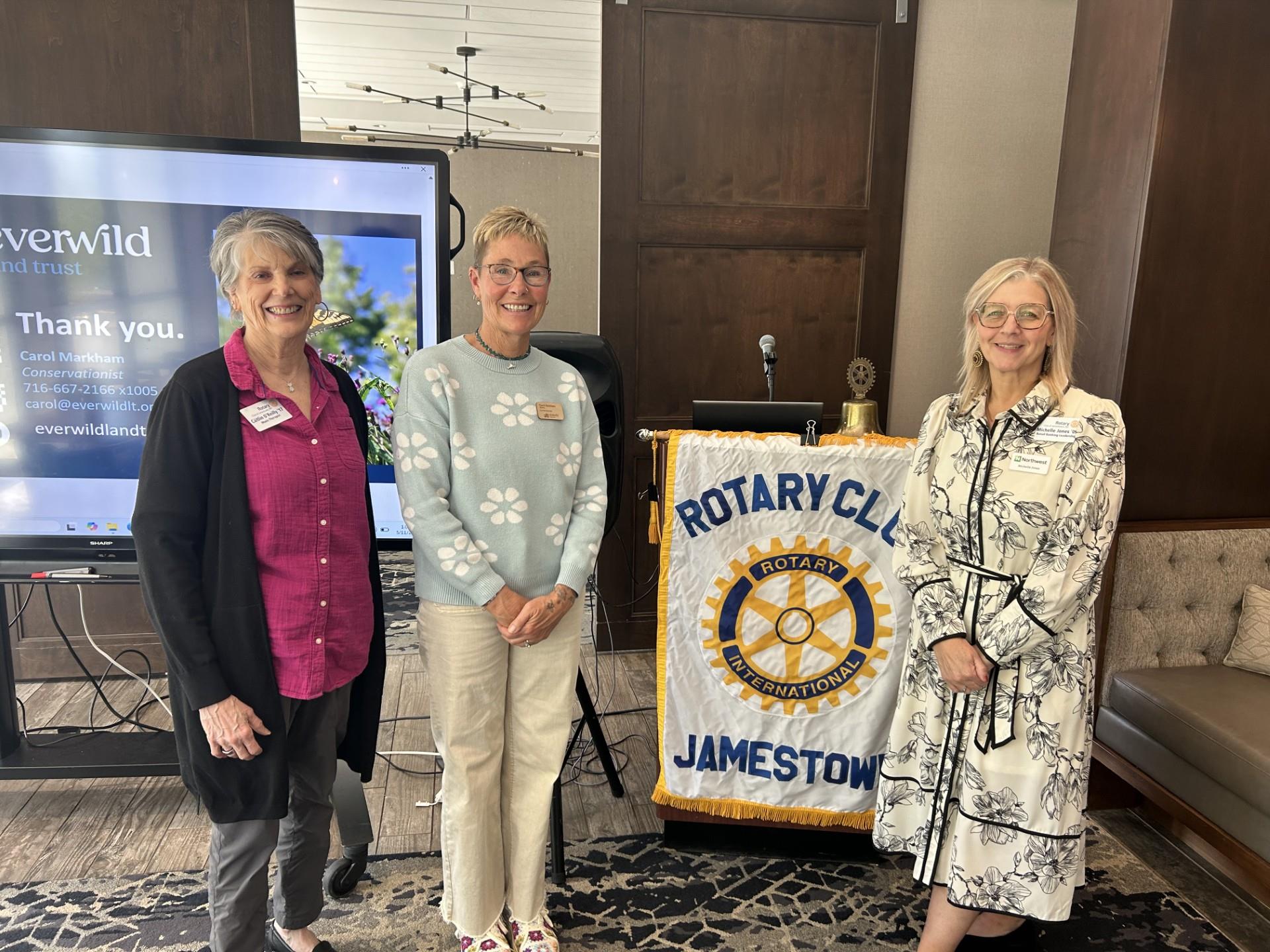
In 1999, she joined the U.S. Fish and Wildlife Service to help lead the BayScapes Program, promoting environmentally beneficial landscaping and the use of native plants through community outreach and partnerships. After relocating to Western New York, she worked for over a decade at Turnbull Nursery in North Collins as a Nursey Associate, focusing on garden center operations, design, and native plant promotion.
In her current role, she leads the Yard Smarts program, providing personalized yard consultations that help homeowners make small, practical changes to support pollinators and wildlife while improving the health of local lakes and communities.
Carol’s presentation discussed their renaming of the trust. Their mission remains the same “Thriving Together Naturally”. The decision to rebrand was a huge endeavor to make this decision. It was announced last Wednesday and its very exciting and presents lots of opportunities.
They have grown over more than three decades bringing people together to care for the watersheds, lands, waterways and lakes that define this region. It is a renewed expression of who we are, trusted stewards rooted in community, and committed to a lasting impact. This includes their three pillars: conservation, restoration and education. Her appearance today is in relation to that third pillar.
Even though you may have only a small property you are still part of the larger environment. If we can concentrate on some of the small things in our backyard there are a number of things we can do. Enhancing and promoting really healthy habits and habitats within that area. Smarter yards equal cleaner water and we all want cleaner water. We are blessed with much water that many areas of the US do not have. We must reduce pollutants, mange stormwater runoff, and planting native plants while removing invasives whenever possible.
Reducing pollutants include using less chemicals, fertilizers and insecticides. If you do need to use them please be judicious in their application. Use mulch or clippings to provide natural fertilization. Cleaning up dog waster is also very important. If you have a septic tank, please make sure it maintained on a regular basis. Cleaning up leaks from your motor vehicles or other landscaping tools. In the winter modify the use of salt to melt ice.
Minimizing water runoff from your house, yard and gardens. Trying to trap and slow runoff from rainstorms. There are absorbent surfaces such as permeable driveways, decks, sidewalks, etc. Route water from gutters into your garden. Rain barrels are another option. Also rain gardens are another option in areas that are low lying. Shrink your lawn to lower the amount of mowing and plant with native plants. Clean clutter from your water gutters on the house and on the street. These all add more nutrients into our lakes.
Planting native plants, bushes and trees in your garden while eliminating invasive species. Native species provide food and shelter for our wildlife. Naturalized plants are not originally from our region but were brought over and adapted here. They may not provide food for some of our wildlife and spread rapidly due to lack of predators. Invasive plants are widely spread throughout our gardens, fields and by roadways.
Native plants are good because they can be often plant and forget unlike other plants. They have adapted to our weather and wildlife. Carol reviewed various types of native, naturalized and invasive species.
Carol also shared some information sheets as well. You can download them here: Local Native Plant Nurseries & Deer Resistant Native Plants.
Questions
There was a question on the loss of milkweed and its impact on the Monarch butterfly. It is basically due to loss of habitat. Land is being farmed or developed. There are b3 types of milkweed native to our area and they can be purchased and planted.
Where do you find native plants? Carol has a list of nurseries that sell native species and she will send that to us, along with plants that are more resistant to deer but not totally immune to them..
There is an event on June 14th at the 5 and 20 Distillery. Which is to support the Everwild Land Trust.