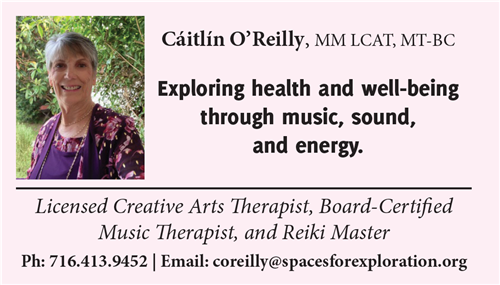
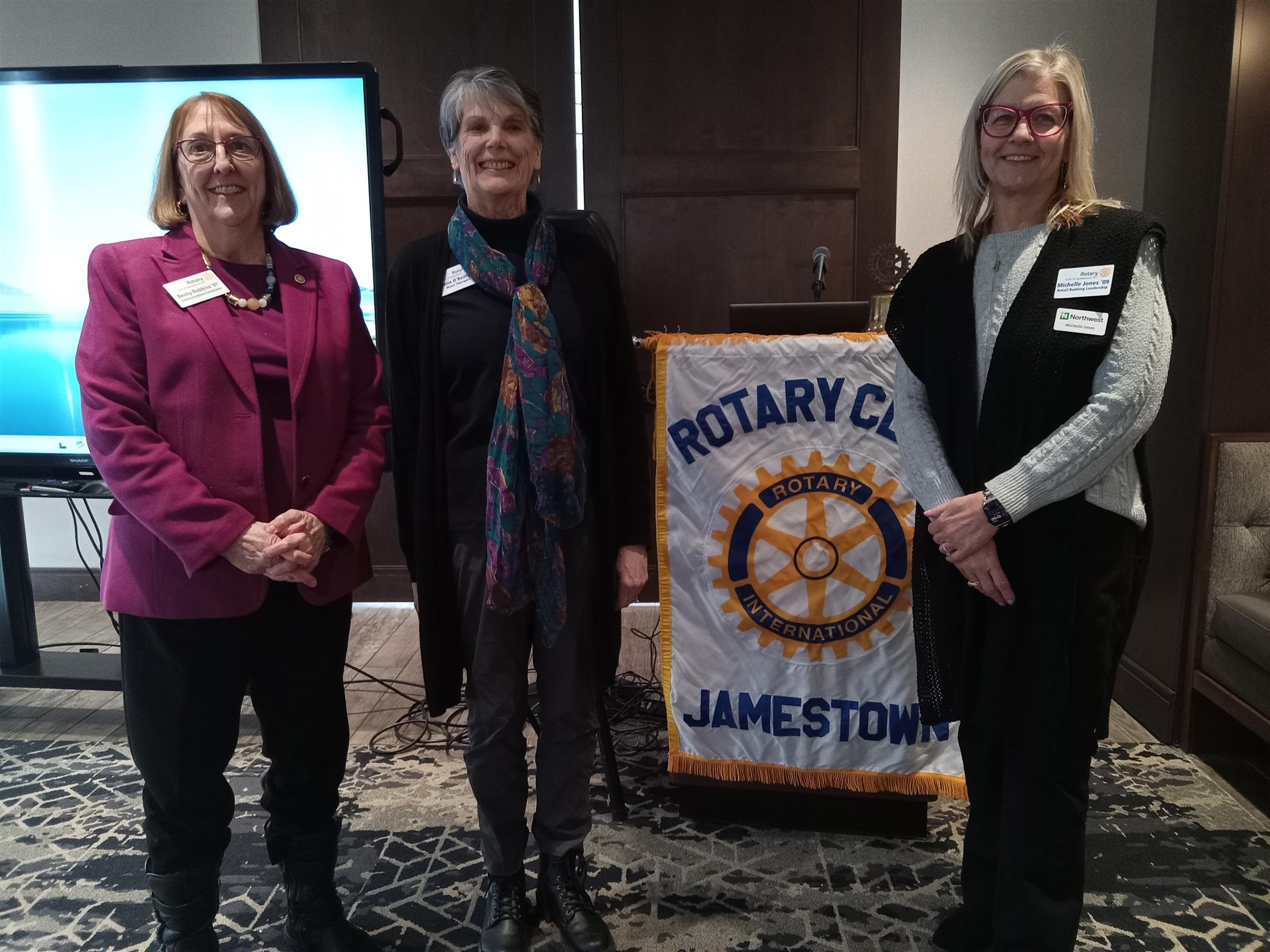
Becky Robbins then introduced our speaker for today – none other than Caitlin O’Reilly.
Caitlin O’Reilly, MM, LCAT, MT-BC, is a New York State licensed creative arts therapist, board-certified music therapist, and Reiki master. She holds bachelor’s and master’s degrees in music therapy from SUNY Fredonia.
She is now a PhD candidate in Depth Psychology, with Specialization in Integrative Therapy and Healing Practices, from Pacifica Graduate Institute.
Caitlin has experience working with adults in a variety of settings and addressing a range of concerns and conditions.
Having experienced being a caregiver for her parents and her spouse prior to their deaths, she has a passion for assisting others through the landscape of grief, loss, and mourning.
The principles of humanistic philosophy, music therapy, Reiki, therapeutic sound, and Jungian depth psychology inform Caitlin’s person-centered approach to meeting life’s challenges.
Our speaker lives in Lakewood with Tava, a 4 1/2-year-old boxer mix, and Voodoo, a seven-year-old black cat.
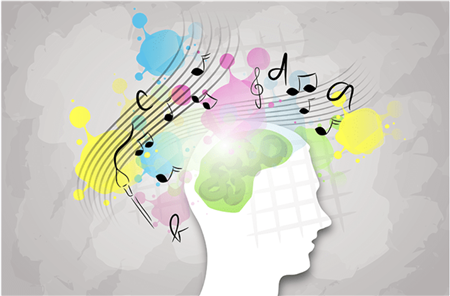
Her program is titled “More than a Melody” and details the clinical power of music therapy for mental and physical health and well-being. She defines music therapy as a clinical and evidence-based practice that uses music interventions to accomplish individualized goals. It must be conducted by certified music therapists and combines musical and therapeutic techniques. It is applicable across various age groups, settings and diagnoses.
Music Therapy is NOT –
- A person with Alzheimers listening to music of their favorite songs
- Groups such as bedside musicians, musicians on call, music practitioners, sound healers, or music thanatologists.
- Celebrities performing at hospitals, schools or other educational or medical venues
- A piano player in the lobby of a hospital
- Medical personnel playing background music for patients
- Artists in residence
- Arts educators
Music therapy offers a holistic approach to well-being through the following core benefits: emotional, physical, cognitive, social and psychological and it affects multiple brain systems.
For those patients with dementia it may reduce behavior symptoms, stimulate cognitive effects, provide emotional well-being, help with memory retrieval and improve socialization.
Music therapy fosters academic and emotional success in schools as well as having wide usage in clinical settings such as hospitals, clinics and therapy centers.
Music therapy is used in corporate environments to improve workplace wellness and productivity.
Caitlin also described the therapeutic techniques that can be used in practice and all of the populations served by therapists.
Caitlin is pursuing her doctorate after much learning. She will have an office at the Bayview Financial Building where she can accept patients.
Fascinating program today, Caitlin!